


DSG vs Traditional Automatic: Why Your VW’s Shifting Feels Different on Cold Vernon Mornings
A cold morning can make a Volkswagen or Audi feel a little different. Maybe your Golf hesitates when you pull away, your Tiguan shifts more firmly than usual, or your Jetta feels notchy for the first few kilometres.
That can be unsettling, especially when you’re counting on your car for a winter drive around Vernon. Some mild changes can be part of a cold transmission warming up. But shifting that stays rough, or gets worse, deserves attention.
Here’s how a DSG differs from a traditional automatic, what cold weather can change, and when it’s time to have your transmission checked.
What is a DSG, and how is it different from a traditional automatic?
DSG stands for Direct-Shift Gearbox. Volkswagen also uses the name S tronic for dual-clutch transmissions in Audi models.
A DSG is an automated manual transmission with two clutches and two sets of gears:
- One clutch handles odd-numbered gears.
- The other handles even-numbered gears.
- While you’re driving in one gear, the next gear can be selected and ready.
- The computer controls the clutches and gear changes, often in milliseconds.
Think of it like having two runners in a relay. One is carrying the baton while the other gets ready to take over. The handoff can be quick, but it may feel more noticeable at low speeds than it does in a conventional automatic.
A traditional automatic usually uses a torque converter. A fluid-filled coupling that transfers engine power to the transmission. It helps the car pull away smoothly and can make slow-speed movement feel gentle.
Neither design is automatically better for every driver. They simply feel different. A DSG can feel direct and responsive. A torque-converter automatic often feels smoother when creeping through traffic or parking.
Why can a DSG feel hesitant or clunky when it’s cold?
Transmission fluid does more than lubricate parts. In a DSG, it also helps the system manage pressure and, on some designs, operate clutch components. When temperatures drop, fluid becomes thicker and flows differently. Until the transmission warms, its computer may adjust how it applies the clutches and selects gears.
That can make a cold DSG feel:
- Notchy during a low-speed gear change
- Hesitant when pulling away from a stop
- Firmer or clunkier in the first few shifts
- Less smooth while manoeuvring or creeping in traffic
The transmission’s mechatronic unit, the electro-hydraulic control assembly that helps manage gear selection and clutch pressure, also needs the right conditions to operate as designed. The vehicle’s computer can adapt shifting during warm-up.
Vernon’s cold mornings can make these changes more noticeable. Give the car a little time, and drive gently until it’s warmed up. There’s no need to rev the engine hard or demand quick acceleration right away.

Use these signs to decide whether cold shifting needs a check
A little change in feel during the first few kilometres may be temporary. What matters is whether it clears up, repeats, or becomes more severe.
- If the shifting feels slightly different only during the first few kilometres, then it may be normal warm-up behaviour. Keep an eye on it.
- If rough shifting continues after about 15 minutes of driving, then arrange professional diagnostics. That timing is a practical warning sign, not a substitute for your vehicle’s own guidance.
- If the transmission repeatedly judders, slips, delays engagement, or bangs into gear, then don’t assume cold weather is the only cause.
- If you hear grinding or whining, or see a transmission warning, then stop driving as soon as it’s safe and contact a repair shop. Continuing to drive could make damage worse.
A helpful rule: a symptom that disappears as the car warms is different from one that persists or worsens. But even a cold-only symptom is worth mentioning if it happens regularly. Details such as the outside temperature, how long you’ve driven, and whether the car was moving slowly or accelerating help a technician narrow down the cause.
DSG service intervals depend on the transmission
You may have heard that DSG fluid and filter service is due every 60,000 km. That interval applies to some DSG versions, but it is not a universal schedule for every Volkswagen or Audi.
Different models and model years can have different transmission designs and maintenance requirements. Some DSGs use wet clutches, which operate with fluid. Others use a dry-clutch design. The service procedure and interval can differ, too.
For example, the commonly cited 60,000 km fluid-and-filter interval is associated with some wet-clutch DSG units. Other transmission types may have a different service schedule. Check the owner’s manual or the maintenance information for your exact vehicle and transmission. Volkswagen’s owner literature and service information is a useful starting point, and DSG servicing information from TPS also describes why requirements vary by gearbox.
This is one reason a generic fluid change can be the wrong approach. A shop needs to identify the transmission and use the correct fluid, procedure, and service interval. Depending on the model, the job may also involve a filter or specific temperature and diagnostic checks.
If a DSG that requires scheduled fluid service goes too long without it, then wear or fluid-related problems may increase the risk of clutch or mechatronic damage. That can turn a scheduled maintenance job into a much more expensive repair. On the other hand, changing fluid on the wrong schedule or using the wrong specification isn’t a safe shortcut either. The right plan starts with identifying the exact gearbox.
What does professional transmission diagnosis involve?
Rough shifting doesn’t automatically mean the transmission needs rebuilding, or even that the transmission is the source of the problem. The transmission computer works alongside other vehicle systems, so a technician needs to look beyond the sensation you feel from the driver’s seat.
A proper assessment may include:
- Reading transmission fault codes with appropriate European diagnostic equipment
- Checking relevant live data and operating conditions
- Inspecting for fluid leaks and confirming the correct service history
- Checking the battery and charging system if low voltage could affect electronic control
- Testing the vehicle and confirming whether the symptom continues once warm
- Verifying the exact transmission type before recommending service or repairs
A code is a clue, not a complete diagnosis. As we explain in our guide to modern vehicle diagnostics, the goal is to find the cause, not just clear a warning or replace parts based on a guess.
Get a clear answer before a small symptom becomes a bigger repair
We know it’s frustrating when a car you depend on starts shifting differently, especially when you’re already managing the cost of owning a vehicle. But ignoring a persistent symptom can risk more wear and a more costly repair later. A timely inspection can help you understand whether your DSG is behaving normally in the cold or needs service.
At L Stop Auto, we’ve served Vernon since 1982. Our team provides transmission service and vehicle diagnostics for European vehicles, using specialized European scan tools and manufacturer-recommended procedures. We’ll explain what we find and what your vehicle needs. Our work maintains your factory warranty, and most repairs include a 1-year/20,000 km labor warranty.
If your Volkswagen or Audi keeps shifting roughly after it warms up, or you notice grinding, whining, or a warning light, contact us before the symptom gets worse.
L Stop Auto
1805 46 Ave, Vernon, BC
Call 250-549-3666 or get in touch.
Related Posts
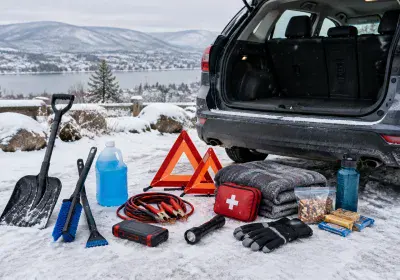
Winter Car Emergency Kit: The 12 Things Every Vernon Driver Should Carry Before December
November is a good time to prepare for the first serious snowfall, not after it has slowed traffic and covered the roads. Vernon’s winter conditions can change quickly. A clear morning can turn into icy streets, slush, or poor visibility…


Heater Blowing Cold? What Your Cooling System Is Telling You Before a Vernon Winter
It's mid-October in Vernon, and the first frost of the season has already dusted the rooftops. You hop in the car on a chilly morning, twist the dial to heat, and instead of warm air rolling over your hands... you…

Porsches, Audis & Volvos in Winter: Which European Cars Actually Need Special Cold-Weather Care?
Late October is a good time to get your European car ready for winter. Cold mornings can arrive before the first big snowfall, and a drive up toward SilverStar can bring very different road conditions from a trip around Vernon.…